Ready to break free from the shackles of debt? In this guide, we’ll dive into the nitty-gritty of how to get out of debt, from assessing your financial situation to seeking professional help. So grab your pen and paper, because we’re about to drop some knowledge bombs on you!
Assessing the Debt Situation
When it comes to getting out of debt, the first step is to assess your current financial situation. This involves gathering all your financial information, identifying different types of debt, and understanding interest rates.
Gathering Financial Information
Before you can tackle your debt, you need to have a clear picture of your financial standing. Gather information on all your debts, including credit card balances, student loans, mortgage payments, and any other outstanding loans.
Identifying Types of Debt
Not all debts are created equal. Some debts may have higher interest rates or stricter repayment terms than others. It’s important to prioritize your debts based on factors such as interest rates, outstanding balances, and the type of debt.
Understanding Interest Rates
Interest rates play a crucial role in how quickly you can pay off your debts. Higher interest rates mean more money goes towards interest rather than paying off the principal balance. Prioritize debts with higher interest rates to save money in the long run.
Creating a Budget
Creating a budget is crucial when trying to get out of debt. It helps you track your expenses, identify areas where you can cut back, and allocate funds towards paying off your debts.
Setting up a Detailed Budget
To set up a detailed budget, start by listing all your sources of income. Then, track your expenses for a month to get an accurate picture of where your money is going. Categorize your expenses into fixed (rent, utilities) and variable (groceries, entertainment). Allocate a portion of your income towards debt repayment, savings, and essential expenses.
Tracking Expenses Effectively
Track your expenses using a budgeting app or spreadsheet. Make sure to categorize each expense accurately to identify areas where you can cut back. Review your spending regularly to stay on track with your budget and adjust as needed.
Cutting Down Unnecessary Expenses
Cutting down unnecessary expenses is key to freeing up money for debt repayment. Identify expenses that are not essential and consider cutting back or eliminating them completely. For example, dining out less frequently, canceling unused subscriptions, or finding more affordable alternatives for your regular expenses. Every dollar saved can go towards paying off your debts faster.
Developing a Repayment Plan
Developing a repayment plan is crucial when getting out of debt. It involves strategizing how to pay off your debts efficiently and effectively, taking into consideration your financial situation and priorities.
Snowball vs. Avalanche Method
The snowball method involves paying off your smallest debt first while making minimum payments on all other debts. Once the smallest debt is paid off, you move on to the next smallest debt, and so on. This method provides a sense of accomplishment and motivation as you see debts being eliminated.
On the other hand, the avalanche method focuses on paying off debts with the highest interest rates first. By tackling high-interest debts first, you can potentially save money on interest payments in the long run. While this method may take longer to see results, it can be more cost-effective.
Negotiating with Creditors
Negotiating with creditors can help you secure lower interest rates or set up more manageable payment plans. It’s important to communicate openly with your creditors about your financial situation and explore options for reducing the burden of debt. Be prepared to provide evidence of financial hardship and make a compelling case for why they should consider your request.
Remember, developing a repayment plan requires discipline and commitment. Stay focused on your goal of becoming debt-free and make adjustments to your plan as needed to stay on track towards financial freedom.
Increasing Income and Savings
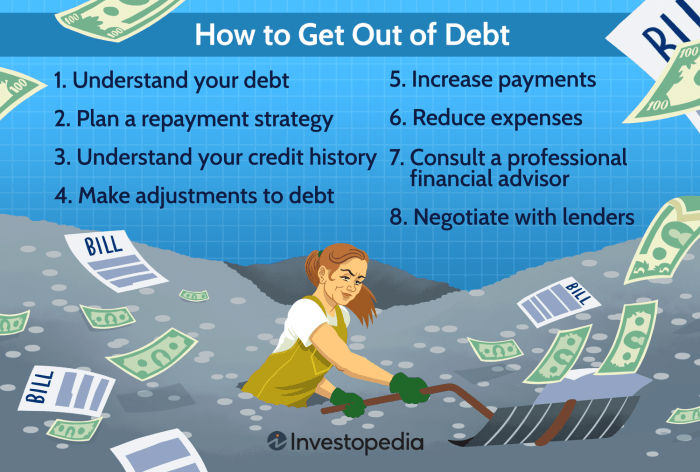
To speed up the process of paying off debt, it’s crucial to find ways to boost your income and save more money. By increasing your earnings and setting aside funds, you can allocate more towards debt repayment and build financial stability.
Ways to Increase Income
- Consider taking on a side hustle or part-time job to supplement your main income.
- Explore freelance opportunities in your field of expertise to earn extra cash.
- Utilize your skills and hobbies to offer services or products for sale.
- Ask for a raise or seek higher-paying job opportunities.
Tips on Saving Money
- Create a detailed budget to track your expenses and identify areas where you can cut back.
- Avoid impulse purchases and prioritize needs over wants when making spending decisions.
- Shop for deals, use coupons, and take advantage of discounts to save on purchases.
- Consider cooking meals at home, packing lunch, and brewing your coffee instead of buying them.
Benefits of Creating an Emergency Fund
An emergency fund serves as a financial safety net in case of unexpected expenses or emergencies. By setting aside money for unforeseen circumstances, you can avoid going further into debt and handle financial setbacks without added stress. Having an emergency fund can provide peace of mind and help you stay on track with your debt repayment goals.
Seeking Professional Help
Seeking professional help for managing debt can be a smart move when you feel overwhelmed or unsure about your financial situation. There are various options available, such as credit counseling, debt consolidation, debt management programs, and consulting with financial advisors or experts.
Credit Counseling and Debt Consolidation
When to consider credit counseling or debt consolidation:
- Credit counseling is a good option if you need help creating a budget, managing your debts, or negotiating with creditors.
- Debt consolidation might be suitable if you have multiple debts and want to combine them into one monthly payment with a lower interest rate.
Debt Management Programs
Explaining how debt management programs work:
- A debt management program involves working with a credit counseling agency to create a repayment plan with your creditors.
- You make one monthly payment to the agency, who then distributes the funds to your creditors based on the agreed-upon plan.
- These programs can help lower interest rates, waive fees, and simplify your payment process.
Consulting with Financial Advisors or Experts
Insights on consulting with financial advisors or experts:
Financial advisors can provide personalized advice on managing your debts, creating a financial plan, and improving your overall financial health.
- Experts can help you understand your options, optimize your budget, and make informed decisions about debt repayment strategies.
- Consulting with professionals can give you peace of mind and a clear roadmap towards financial stability.